
- What Is a Wali in Islam?
- Is a Wali Required for Nikah?
- Who Can Be a Wali?
- What Role Does the Wider Family Play in Rishta?
- Can a Wali Refuse a Marriage?
- What Happens When a Wali Unreasonably Refuses? (Adhl)
- Can a Woman Marry Without a Wali?
- Cultural Rishta Customs vs. Religious Requirements
- How the Rishta Process Typically Works, Step by Step
- Building Trust Between Families and Individuals
- Final Thoughts about Wali & Family Role in Rishta
- Frequently Asked Questions
- Take the Next Step Toward a Verified Match
Understanding the Wali & family role in rishta is one of the first things every Muslim family needs to get right before a marriage proposal moves forward. Every rishta conversation eventually lands on one question: who actually gets the final say? Is it the couple? The parents? The Wali? Half of Twitter, apparently?
The honest answer is that Islam gives a clear answer, and culture likes to add its own footnotes. This guide separates the two, so you know exactly what’s a religious requirement and what’s just Auntie’s opinion dressed up as one.
What Is a Wali in Islam?
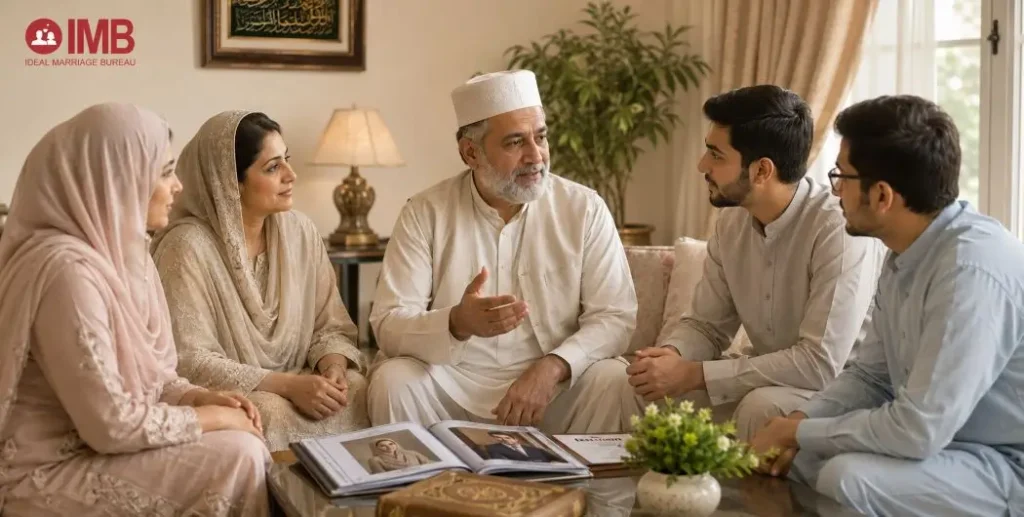
A Wali is a marriage guardian, usually a close male relative, who represents a woman in her nikah contract. In most schools of Islamic thought, his consent is part of what makes the marriage valid.
The role isn’t about controlling a woman’s life choices. It’s a protective and representative function, rooted in the idea that marriage is a serious contract, not a casual agreement, and someone trustworthy should help oversee that contract on her behalf.
Several hadith collections, including Abu Dawud and Tirmidhi, report that marriage without a Wali is considered invalid according to many scholars. That single narration is the foundation of an entire debate that’s still active in Islamic scholarship today.
Is a Wali Required for Nikah?
Mostly yes, but the details depend on which school of thought you’re following.
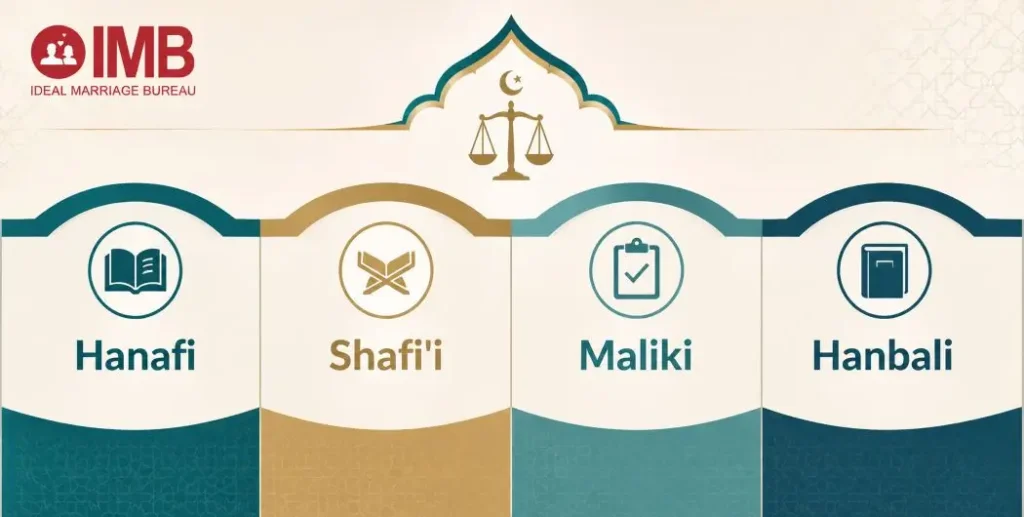
- Shafi’i, Maliki, and Hanbali schools generally hold that a Wali is a requirement for a woman’s nikah to be valid, with limited exceptions.
- Hanafi school takes a more flexible position, allowing an adult woman to conduct her own marriage contract, though it still strongly encourages involving a Wali.
Here’s the quick comparison:
| Madhab | Wali Requirement |
|---|---|
| Hanafi | Recommended, but not always mandatory for an adult woman. |
| Shafi’i | Mandatory. |
| Maliki | Mandatory. |
| Hanbali | Mandatory. |
So when someone confidently says “Islam absolutely requires a Wali, no exceptions,” they’re usually speaking from one school’s view, not all of them. Nuance matters here more than internet certainty.
Who Can Be a Wali?
There’s a natural order of priority, and it usually goes like this:
- Father
- Paternal grandfather
- Brother
- Paternal uncle
- A qualified male relative from the father’s side
- A qadi (Islamic judge) or authorized representative, if no eligible relative is available
This hierarchy exists so a woman is never left without someone to represent her interests, even if her immediate family isn’t available or willing.
What Role Does the Wider Family Play in Rishta?
This is where things get interesting, because “family role” in rishta culture is much bigger than the religious role of a Wali.
In South Asian and broader Muslim communities, rishta isn’t just two people deciding to marry. It’s often a full committee decision, complete with opinions from parents, siblings, aunts, and sometimes a family friend who’s “seen a lot of rishtas go wrong, so listen to me.”
None of that extended involvement is a religious requirement. It’s cultural. Families vet backgrounds, check compatibility, discuss finances, and generally try to protect their loved ones from a bad match. That instinct is understandable. It just isn’t the same thing as the Wali’s religious function.
In short: the Wali’s consent is a religious matter. Everyone else’s opinion is a cultural one, and it’s worth knowing the difference before family debates get mistaken for fiqh.
Can a Wali Refuse a Marriage?
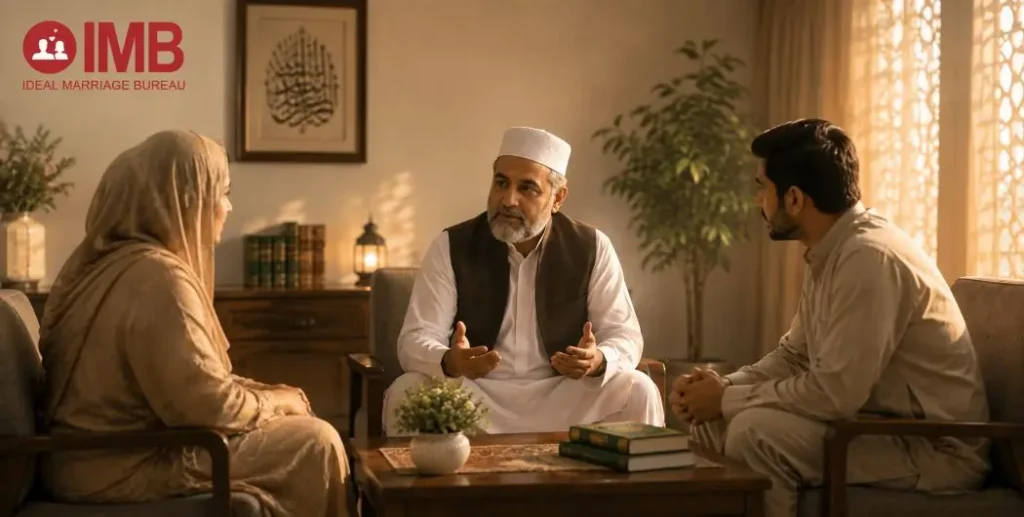
Yes, but not without limits.
A Wali can decline a proposal if he has legitimate concerns, such as the suitor’s character, religious commitment, or ability to fulfill marital responsibilities. That’s a reasonable exercise of his protective role.
What he can’t do, according to most scholars, is refuse a suitable match without valid reason simply because he disapproves personally or wants to control the outcome. Islam actually addresses this directly.
What Happens When a Wali Unreasonably Refuses? (Adhl)
This situation has a name in Islamic law: Adhl, meaning the unjust withholding of consent by a Wali.
Scholars point to Quran 2:232, which instructs guardians not to prevent women from remarrying a suitable partner once mutual agreement exists. This verse is frequently cited as direct evidence that a Wali’s authority has boundaries, not blanket control.
If a Wali is being unreasonable, a woman isn’t left stuck. She can:
- Discuss the concern openly with her Wali first
- Involve a mediator, such as a respected family elder or imam
- Approach the next Wali in line, if eligible
- Take the matter to a qadi or Islamic authority, who can act as Wali if the refusal is deemed unjust
This part of the topic gets skipped a lot online, which is unfortunate, because it’s often the exact situation someone searching this topic is actually going through.
Can a Woman Marry Without a Wali?
Scholars disagree here, and it’s worth stating plainly instead of pretending there’s one universal answer.
The Hanafi school generally permits an adult, sane woman to contract her own marriage. Other major schools require a Wali’s involvement for validity. Because of this, the honest, responsible answer is: it depends on the school of thought you follow, and it’s worth consulting a knowledgeable scholar for your specific situation rather than relying on a single blog post (including this one).
Cultural Rishta Customs vs. Religious Requirements
Let’s put it side by side, because this is the confusion that causes the most family tension:
| Religious Requirement (Fiqh) | Cultural Addition (Custom) |
|---|---|
| Wali’s consent for nikah validity | Extended family approval before even meeting |
| Suitable match assessment by Wali | Detailed background checks by relatives |
| Mahr agreed between parties | Family negotiations over dowry-adjacent expectations |
| Mutual consent of bride and groom | Group decision-making involving multiple relatives |
Culture isn’t inherently wrong. Families genuinely want to protect their own. But when cultural expectations get labeled as religious obligation, that’s where unnecessary pressure and guilt creep in, and that’s exactly the gap this article is meant to close.
How the Rishta Process Typically Works, Step by Step
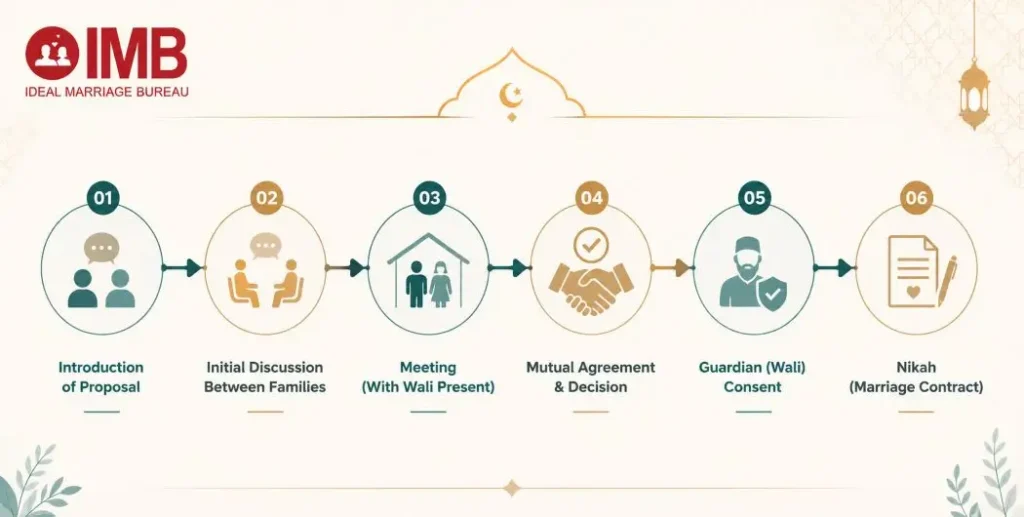
- Initial introduction — through family, a matchmaker, or a matrimonial platform
- Family discussion — background, values, and compatibility get reviewed
- Meeting arranged — often chaperoned, per family and religious comfort levels
- Mutual interest confirmed — both individuals agree to proceed
- Wali involvement — the Wali reviews the proposal and gives consent
- Nikah proceedings — the marriage contract, mahr, and formalities are finalized
Simple in theory. In practice, every family adds their own extra steps, and most of them involve tea.
Building Trust Between Families and Individuals
A healthy rishta process works best when families treat it as guidance rather than control, and individuals treat their Wali as a protector rather than an obstacle. That balance is genuinely achievable, and it’s the version of this process most people actually want.
If you’re navigating a rishta and want a process that respects both religious requirements and personal comfort, working with a platform that understands family-inclusive matchmaking makes the whole experience smoother. Explore verified, family-vetted profiles at Ideal Marriage Bureau and see how a structured, respectful process actually feels.
Final Thoughts about Wali & Family Role in Rishta
The Wali’s role in rishta is about protection and representation, grounded in religious guidance with real boundaries. The wider family’s role is cultural, well-intentioned, and often larger than it strictly needs to be.
Knowing where one ends and the other begins doesn’t just settle arguments at the dinner table. It helps everyone approach marriage with clarity instead of pressure, and that’s a healthier place to start a life together from.
Frequently Asked Questions
1. Is a Wali mandatory in every Islamic marriage? It depends on the school of thought. Shafi’i, Maliki, and Hanbali schools generally require a Wali for a valid nikah, while the Hanafi school allows more flexibility for an adult woman.
Is a Wali mandatory in every Islamic marriage?
It depends on the school of thought. Shafi’i, Maliki, and Hanbali schools generally require a Wali for a valid nikah, while the Hanafi school allows more flexibility for an adult woman.
Can a Wali refuse a marriage proposal without a reason?
Not fairly. A Wali can decline for legitimate concerns, but unreasonable refusal without valid grounds is addressed in Islamic law under the concept of Adhl.
What is Adhl in Islamic marriage law?
Adhl refers to a Wali unjustly withholding consent for a suitable marriage proposal, a situation scholars say a woman can address through mediation or a qadi.
Who is next in line if a woman’s father can’t act as Wali?
Typically the paternal grandfather, then a brother, followed by a paternal uncle, and finally a qadi if no eligible relative is available.
Is family involvement in rishta a religious requirement?
Extended family involvement is largely cultural. The religious requirement centers specifically on the Wali’s consent, not the wider family’s approval.
Take the Next Step Toward a Verified Match
You’ve seen the mistakes. Now skip them entirely. Contact Ideal Marriage Bureau today and let a verified matchmaking process do the heavy lifting your family shouldn’t have to do alone.