
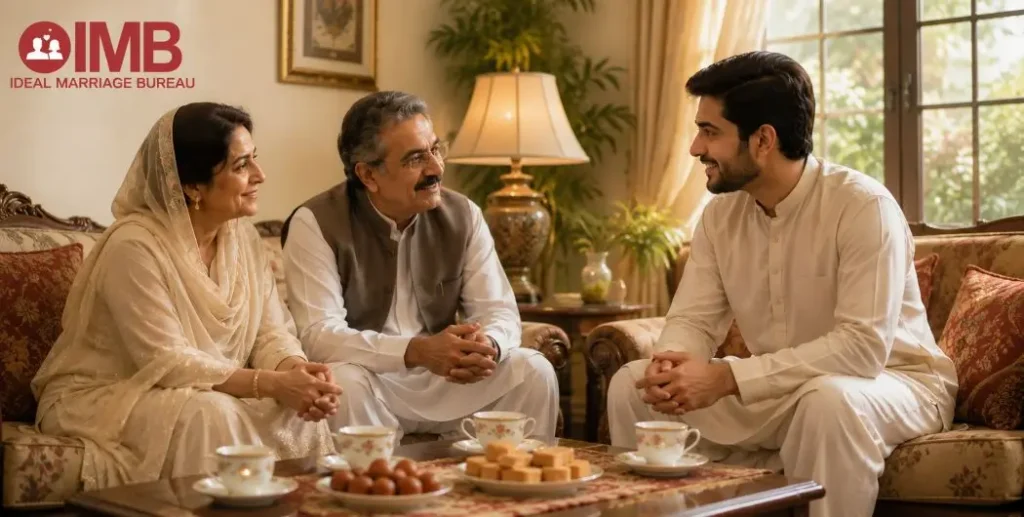
- Why Asking the Right Questions Matters Before Marriage
- 1. Questions About Personal Values
- 2. Questions About Family Expectations
- 3. Questions About Religion and Culture
- 4. Questions About Education and Career Goals
- 5. Questions About Financial Planning
- 6. Questions About Lifestyle and Daily Habits
- Ready to start your own rishta process the right way?
- 7. Questions About Communication and Conflict Resolution
- 8. Questions About Children and Parenting
- 9. Questions About Health and Well-being
- 10. Questions About Future Goals and Relocation
- Common Red Flags to Watch For
- How Ideal Marriage Bureau Helps Families Ask the Right Questions
- Final Checklist Before Accepting a Proposal
- Frequently Asked Questions
- Not sure where to start?
A marriage proposal arrives with flowers, sweets, and a hundred opinions from relatives. It rarely arrives with a manual.
That’s a problem, because the Questions to Ask Before Accepting a Proposal often matter more than the proposal itself. Marriage researchers agree: couples who talk through values, money, family, and expectations early tend to build stronger foundations than those who simply hope things “work out.”
This guide breaks the process into ten practical categories, backed by real research, not guesswork. Use it as a checklist before you say yes to a rishta or a proposal in any form.
At Ideal Marriage Bureau, we’ve guided families through countless rishta evaluations. One lesson stands out: asking thoughtful questions early helps everyone uncover shared values, catch mismatched expectations, and avoid painful surprises after the wedding.
Let’s get into the questions.
Why Asking the Right Questions Matters Before Marriage
Marriage decisions often happen fast. A few meetings, a few phone calls, and suddenly a family expects an answer.
That pressure works against good decision-making. Slowing down to ask real questions gives both sides a clearer picture before anyone signs up for a lifetime commitment.
Research backs this up. Couples who complete structured premarital preparation show a 31% lower risk of divorce or separation compared to couples who skip it, according to a long-term study published in the Journal of Family Psychology by researchers Stanley, Amato, Johnson, and Markman (source). Asking the right questions before marriage works the same way preparation does — it surfaces problems while they’re still easy to solve.
Think of these 25 questions as a pressure test. Not to scare anyone off, but to make sure the relationship can handle real life, not just the excitement of a rishta meeting.
1. Questions About Personal Values
Shared hobbies are nice. Shared values keep a marriage standing after the honeymoon photos fade.
Ask these:
- What matters most to you in life right now?
- How do you personally define a successful marriage?
- What role does personal growth play in your day-to-day life?
A couple can disagree on movies and still thrive. A couple who disagrees on what marriage is for usually struggles. These questions surface that difference early, while it’s still just a conversation and not a conflict.
2. Questions About Family Expectations
In most rishta processes, you’re not just marrying a person. You’re marrying a family structure too.
Ask these:
- How involved do you expect our families to be in our daily life?
- What are your expectations around living with in-laws?
- How does your family typically handle major decisions?
Some families expect weekly Sunday lunches together. Others expect independence from day one. Neither approach is wrong, but mismatched expectations here cause more friction than almost anything else in the first year of marriage.
3. Questions About Religion and Culture
Two people can share a religion and still practice it completely differently.
Ask these:
- How do you practice your faith on a daily basis?
- Which religious or cultural traditions are non-negotiable for you?
- How do we plan to raise our children religiously and culturally?
“We’re both Muslim” or “we’re both Hindu” isn’t the full picture. Practice level, festival observance, and daily rituals vary widely, even within the same faith and even within the same city.
| Compatibility Area | Questions to Compare | Why It Matters |
|---|---|---|
| Practice Level | Daily prayer, fasting, and worship habits. | Mismatched levels of religious practice can lead to long-term misunderstandings and conflict. |
| Festivals & Traditions | Which religious or cultural festivals are celebrated and how. | Shapes family traditions, yearly routines, and shared experiences. |
| Dietary Practices | Food preferences or restrictions, including halal, kosher, or vegetarian norms. | Affects everyday meals, hosting guests, and family gatherings. |
| Dress Expectations | Cultural or religious dress expectations before and after marriage. | Prevents misunderstandings and unexpected expectations after marriage. |
4. Questions About Education and Career Goals
Career plans shape almost everything else: where you live, how much time you spend together, and how you split responsibilities.
Ask these:
- Do you plan to continue working after marriage?
- What are your long-term career ambitions?
- How do you feel about relocating for a career opportunity?
If one partner dreams of running a business abroad and the other assumes a quiet life in the family hometown, that’s worth knowing now — not two years into the marriage.
5. Questions About Financial Planning

Here’s a fact that surprises almost everyone: money isn’t just a top cause of divorce. It’s the top predictor, according to peer-reviewed research.
A Kansas State University study analyzing data from 4,500 couples found that financial disagreements predicted divorce more strongly than any other type of conflict, even after controlling for income, net worth, and debt (source). It didn’t matter how much money the couple had. It mattered how they argued about it.
Ask these:
- How do you approach budgeting and saving?
- Will we manage finances jointly, separately, or a mix of both?
- Are there any existing debts or financial obligations I should know about?
| Financial Topic | What to Clarify |
|---|---|
| Income Transparency | Discuss the approximate income range, employment stability, and overall financial situation. |
| Account Structure | Decide whether you prefer joint accounts, separate accounts, or a combination of both. |
| Family Financial Support | Clarify any ongoing financial responsibilities toward parents, siblings, or other dependents. |
| Wedding & Dowry Expectations | Discuss wedding expenses, gift expectations, and who is responsible for covering different costs. |
Money conversations feel awkward before marriage. They feel a lot more awkward after it, when assumptions collide with reality.
6. Questions About Lifestyle and Daily Habits
This category sounds small. It isn’t.
Ask these:
- What does your ideal daily routine look like?
- How do you feel about socializing, hobbies, and personal space?
Marriage is mostly made of ordinary Tuesdays, not grand romantic gestures. A night owl marrying an early riser can absolutely work, but it works better when both people know what they’re signing up for.
Ready to start your own rishta process the right way?
Get in touch with Ideal Marriage Bureau today and let our team guide your family through a thoughtful, structured matchmaking journey.
7. Questions About Communication and Conflict Resolution
Every couple fights. The couples who stay married just fight better.
Ask these:
- How do you typically handle disagreements?
- How comfortable are you discussing difficult topics openly?
The Gottman Institute, after decades of research on thousands of couples, identified four communication habits — criticism, contempt, defensiveness, and stonewalling — that reliably predict relationship breakdown (source). The same research found that stable couples maintain roughly five positive interactions for every negative one during conflict.
You can’t test someone’s conflict style over one rishta meeting and a cup of tea. But you can ask directly, and pay attention to how they answer, not just what they say.
8. Questions About Children and Parenting
This one deserves a real conversation, not a quick assumption.
Ask these:
- Do you want children, and if so, how many and roughly when?
- What parenting style do you envision for our future kids?
Timeline mismatches are more common than people expect. One partner is ready in year one; the other is thinking year five. Better to know that before the wedding, not after.
9. Questions About Health and Well-being
This topic needs sensitivity, not a checklist tone.
Ask these:
- Is there any relevant medical history I should be aware of?
- How do you approach mental and physical well-being generally?
Frame this as mutual disclosure, not an interrogation. Many families prefer having this conversation through parents or a trusted matchmaker rather than directly between the couple, and that’s a completely reasonable approach. For specific medical or genetic concerns, a conversation with a qualified doctor is worth more than any article, including this one.
10. Questions About Future Goals and Relocation
Where you’ll live in ten years shapes almost every other decision you make together.
Ask these:
- Where do you see us living in five to ten years?
- Are you open to relocating, whether to a new city or a new country, for career or family reasons?
For international rishta matches especially, this question can’t wait until after the wedding invitations go out.
Common Red Flags to Watch For
Not every answer needs to be perfect. But some patterns deserve extra attention:
- Evasiveness. Vague, dodging answers to direct questions.
- Inconsistency. The individual’s story doesn’t match what the family says.
- Pressure to rush. Being pushed to decide before you’ve had time to ask questions.
- Financial secrecy. Refusal to discuss money, debts, or family financial obligations.
- Disrespect during discussions. How someone treats you during the questioning process often predicts how they’ll treat you after the wedding.
None of these guarantee a bad marriage on their own. But together, they’re worth pausing for.
How Ideal Marriage Bureau Helps Families Ask the Right Questions
We’ve sat with hundreds of families through the rishta process, and one pattern keeps repeating: the families who ask thoughtful, structured questions end up with far fewer regrets than the ones who rely on gut feeling alone.
Ideal Marriage Bureau builds space into every introduction for these conversations to happen naturally, without awkwardness and without rushing anyone toward a decision. We’re not here to pressure a yes. We’re here to help you get a real answer to the question that matters: is this the right match?
Final Checklist Before Accepting a Proposal
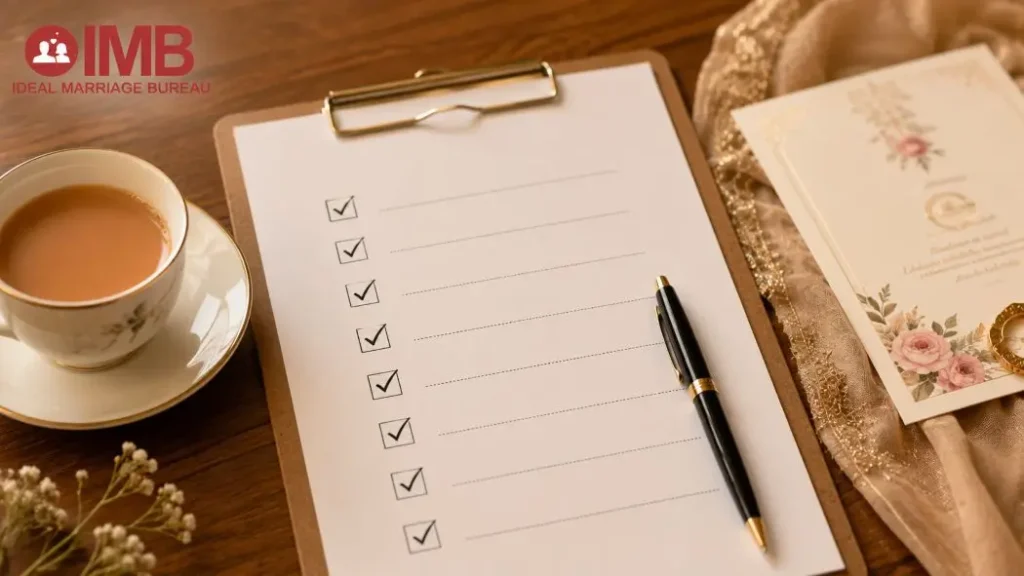
Before you say yes, run through this condensed list:
- Personal values align on the big things
- Family involvement expectations are discussed
- Religious and cultural practices are compatible
- Career and education plans are compatible
- Financial habits and expectations are transparent
- Daily lifestyle and routines are discussed
- Communication style feels safe and respectful
- Views on children and parenting are aligned
- Health and well-being have been discussed honestly
- Future goals, including relocation, are shared
Frequently Asked Questions
What questions should you ask before accepting a marriage proposal?
Cover ten areas at minimum: personal values, family expectations, religion and culture, career goals, finances, lifestyle, communication style, children, health, and future plans. Together, these questions to ask before accepting a proposal reveal whether two people are truly compatible for the long term.
Why is it important to ask questions before saying yes to a rishta?
The rishta process often moves quickly. Asking direct questions slows things down enough to catch mismatched expectations before they turn into post-marriage conflict.
What financial topics should be discussed before marriage?
Budgeting habits, joint versus separate accounts, existing debts, and family financial obligations all deserve a direct conversation. Financial disagreements are the single strongest predictor of divorce, according to peer-reviewed research from Kansas State University.
How can families assess compatibility before marriage?
Structure the conversation around values, family involvement, religion, lifestyle, and finances rather than relying on a single meeting or a gut feeling.
What are the biggest red flags in a marriage proposal?
Watch for evasive answers, inconsistent stories, pressure to decide quickly, and secrecy around finances or family obligations.
Should health and lifestyle be discussed before marriage?
Yes, though the conversation deserves sensitivity. Mutual, respectful disclosure works better than a checklist-style interrogation, and family or matchmaker mediation can help when a direct conversation feels difficult.
How can parents help evaluate a marriage proposal?
Parents can support the process by helping assess family compatibility and watching for red flags, while still leaving room for the couple to build their own connection.
How does Ideal Marriage Bureau help families make informed marriage decisions?
Ideal Marriage Bureau structures every introduction to allow time and space for honest conversations, drawing on years of experience guiding families through the rishta process.
Not sure where to start?
Explore Ideal Marriage Bureau’s matchmaking services and get expert support through every step of the rishta evaluation process – from first introduction to final decision.