
- Why Rishta Mistakes Happen More Often Than Families Realize
- 15 Common Rishta Mistakes to Avoid
- Ready to Avoid These Mistakes Entirely?
- 6. Ignoring Education and Career Compatibility
- 7. Not Discussing Future Plans and Marriage Goals
- 8. Letting Family Pressure Override Personal Judgment
- 9. Not Asking the Right Questions Before Accepting a Proposal
- 10. Relying on Unverified or Fake Marriage Profiles
- 11. Ignoring Communication Gaps Before Marriage
- 12. Choosing an Unreliable or Unverified Marriage Bureau
- 13. Not Preparing Properly for the First Rishta Meeting
- 14. Failing to Verify Documents and Family Credentials
- 15. Making the Final Decision Based on Appearance Alone
- Frequently Asked Questions
- Take the Next Step Toward a Verified Match
A good rishta doesn’t fall apart because two people were wrong for each other. More often, it falls apart because somewhere along the way, someone skipped a step.
Maybe nobody verified the family background. Maybe the first meeting happened in a rush, with fifteen relatives in the room and zero real conversation. Maybe everyone got so excited about the photos that nobody asked what actually matters.
These are common rishta mistakes, and they happen far more often than families like to admit. The good news: almost every one of them is avoidable once you know what to look for.
This guide walks through 15 mistakes that quietly derail otherwise promising proposals, and what to do instead. Think of it as the conversation an experienced matchmaker would have with you over chai, minus the awkward silences.
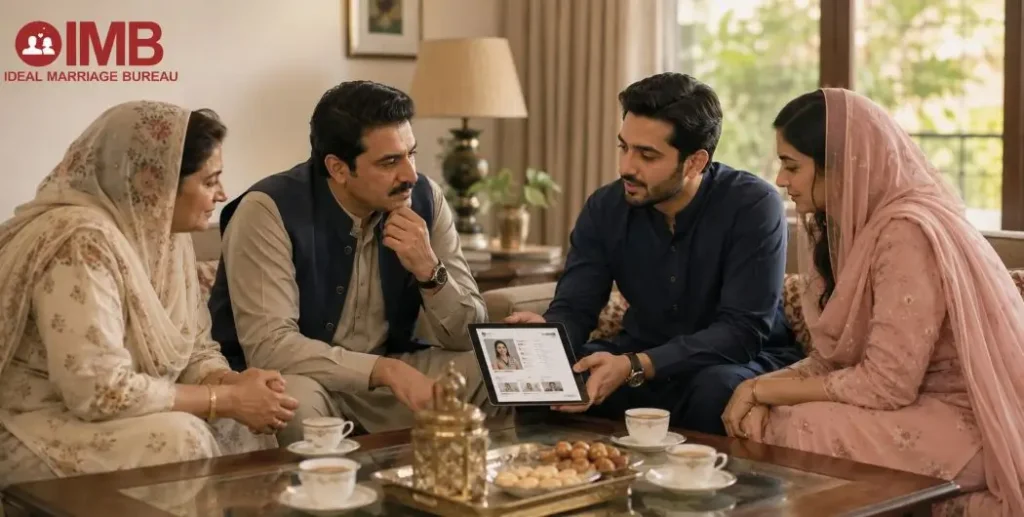
Why Rishta Mistakes Happen More Often Than Families Realize
Marriage decisions carry emotional weight, and emotional weight has a habit of clouding judgment. A proposal arrives, everyone gets excited, and due diligence quietly takes a back seat.
Traditional, word-of-mouth rishta processes weren’t built with verification in mind. They relied on trust between families who already knew each other. That trust doesn’t scale well to a world of WhatsApp groups, online profiles, and long-distance introductions.
Most families also simply don’t know what questions are fair to ask, or when to ask them. Nobody hands out a manual before the first rishta meeting.
This article is that manual. The mistakes below come from patterns matchmaking consultants at Ideal Marriage Bureau see repeat themselves, proposal after proposal.
15 Common Rishta Mistakes to Avoid
1. Not Verifying the Family Background Before Proceeding
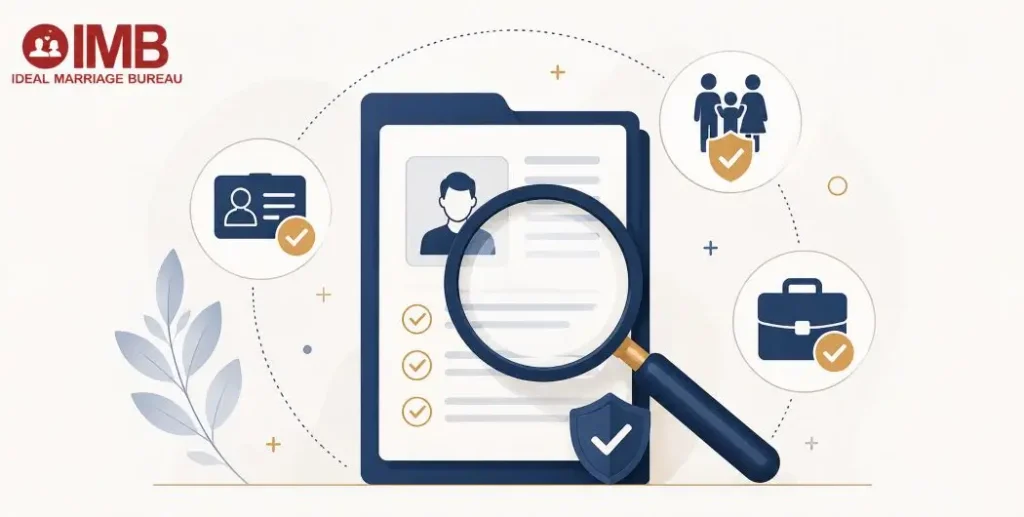
A proposal isn’t just about the individual. It’s about the family that individual comes from, and that family’s reputation, values, and history matter just as much.
Skipping this step is one of the most common rishta mistakes families make, usually because it feels impolite to ask. But a respectful, structured background check protects everyone involved, not just one side.
A proper check goes beyond “we know someone who knows them.” It looks at consistent, verifiable details: where the family lives, their profession, and whether the story they tell matches what others confirm independently. Ideal Marriage Bureau’s marriage bureau verification process covers exactly what this should include.
2. Ignoring Red Flags in the Marriage Proposal
Every proposal comes with a few nerves. That’s normal. What’s not normal is inconsistency.
Watch for details that shift between conversations, reluctance to let families meet, or pressure to decide within days. A genuine proposal can handle questions. A shaky one avoids them.
Families sometimes explain away these signs because everything else “looks good on paper.” Paper isn’t the problem. Paying attention early is what separates a rishta process that goes smoothly from one that ends in regret.
3. Rushing the Decision Without Proper Family Meetings
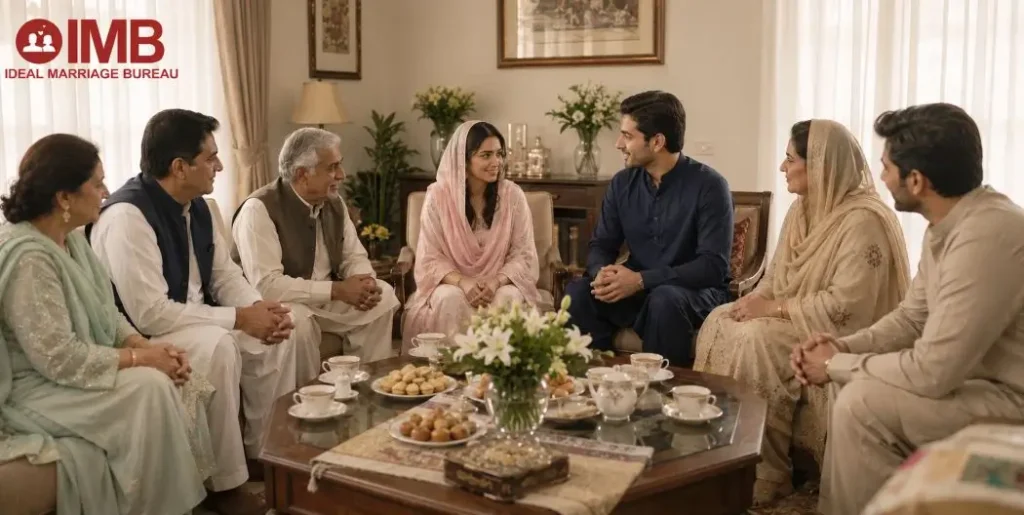
One meeting, however pleasant, is not enough information for a life decision. Yet a huge number of proposals get accepted or rejected after a single sitting.
Multiple interactions, ideally with some one-on-one conversation between the individuals involved, reveal far more than a formal first meeting ever will. People behave differently once the initial nervousness fades.
Ideal Marriage Bureau’s guide on the rishta process step by step breaks down how many interactions typically happen before a decision, and why that pacing matters.
4. Skipping Profile and Identity Verification
Fake or exaggerated marriage profiles are a real problem, especially online. A profile picture, a job title, and a warm bio don’t confirm anyone’s actual identity.
Basic identity verification, CNIC checks, proof of employment, and confirmation of marital status, should happen before serious conversations begin, not after emotional investment has already built up.
This is precisely why verified rishta services exist: to remove the guesswork families otherwise carry alone.
5. Overlooking Financial and Lifestyle Compatibility
Money conversations feel awkward before marriage, so families often postpone them until after the nikah. That’s backwards.
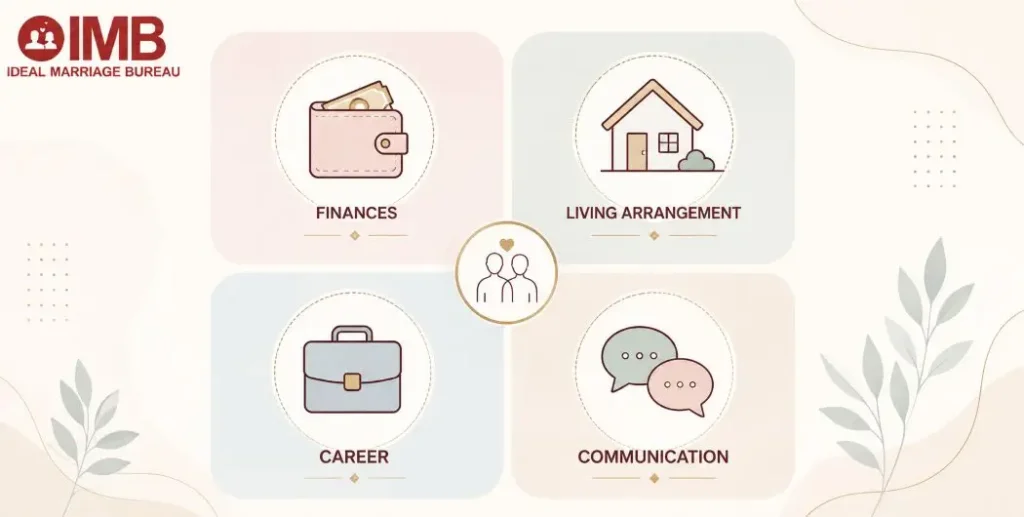
Financial expectations, who manages the household budget, whether both partners will work, how income gets shared, need airing early. So does lifestyle: urban versus rural living, joint versus nuclear family setup, and daily routines.
Quick compatibility checklist:
| Area | Questions to Discuss Before Accepting |
|---|---|
| Finances | Income expectations, spending habits, savings goals, and how financial responsibilities will be shared. |
| Living Arrangement | Whether you plan to live in a joint family or an independent household, and future housing plans. |
| Lifestyle | Daily routine, social habits, religious practices, hobbies, and work-life balance expectations. |
| Career | Whether both partners plan to work after marriage, career goals, and support for each other’s professional growth. |
Skipping this conversation is one of the quieter common rishta mistakes, because it rarely causes conflict at the proposal stage. It causes conflict two years into the marriage instead.
Ready to Avoid These Mistakes Entirely?
Reading about common rishta mistakes is useful. Having a team that actively prevents them is better. Ideal Marriage Bureau verifies identity, family background, and documentation before a proposal ever reaches you, so you’re evaluating a real match, not gambling on one. Browse verified profiles or explore how the process works on our services page.
6. Ignoring Education and Career Compatibility
A mismatch here isn’t about degrees looking impressive on a profile. It’s about whether both people’s expectations around work and career growth actually line up.
If one partner expects the other to pause a career after marriage, and that expectation was never discussed, resentment builds quietly. Ask directly. It’s a far better use of an awkward moment than avoiding it.
7. Not Discussing Future Plans and Marriage Goals
Children, relocation abroad, how involved extended family will be in daily life, these are the conversations families tend to skip because they feel too far ahead to matter yet.
They matter enormously. A proposal that looks perfect can unravel fast once one partner discovers the other had completely different plans for the next five years.
Ideal Marriage Bureau’s complete guide to the rishta process includes a section on the kinds of future-planning questions worth raising early.
8. Letting Family Pressure Override Personal Judgment
Family input matters in the rishta process, and it should. But there’s a real difference between guidance and pressure.
When someone accepts a proposal mainly because relatives kept pushing, or because saying no felt disrespectful, the decision wasn’t fully theirs. That’s a fragile foundation for a marriage.
Respecting family opinions and making an informed, personal choice aren’t opposites. A healthy rishta process makes room for both.
9. Not Asking the Right Questions Before Accepting a Proposal
Vague questions get vague answers. “Are you a family-oriented person?” invites a rehearsed yes every time.
Better questions get specific: How do you handle disagreements? What does a typical weekend look like for you? What would you want to change about your current lifestyle after marriage?
Families who prepare a real list of questions, rather than relying on small talk, consistently make better-informed decisions. Ideal Marriage Bureau’s FAQ page covers several common concerns families raise during this stage.
10. Relying on Unverified or Fake Marriage Profiles
Informal WhatsApp groups and unverified online listings have made rishta hunting faster, but not necessarily safer. Anyone can post a profile with borrowed photos and invented details.
A verified marriage bureau screens profiles before they ever reach a prospective family, which removes a huge chunk of the risk families otherwise carry when searching independently.
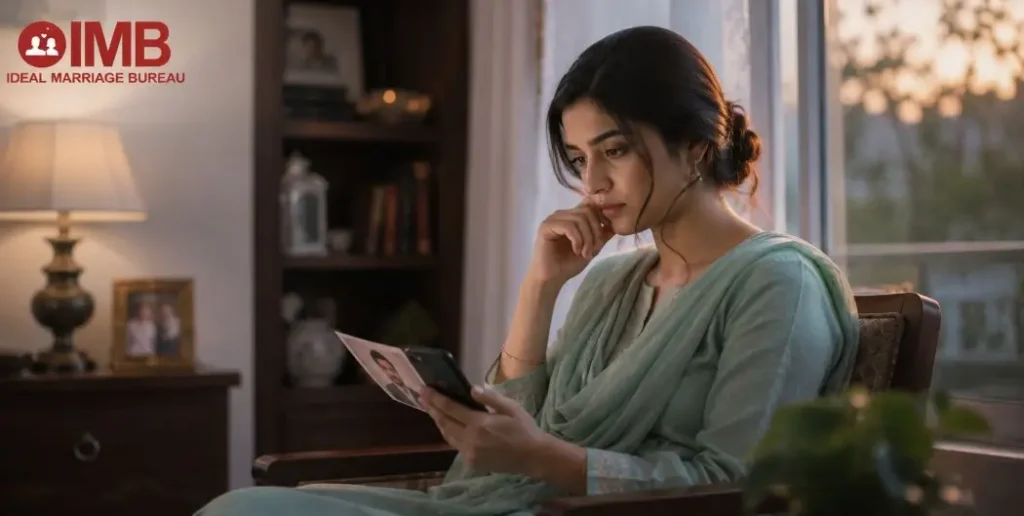
11. Ignoring Communication Gaps Before Marriage
How two people talk to each other before marriage tends to predict how they’ll talk to each other after it. If a conversation already feels one-sided, dismissive, or hard to have honestly, that pattern rarely fixes itself later.
Communication research backs this up. The Gottman Institute, whose researchers have studied thousands of couples over several decades, has found that most relationship conflicts are rooted in ongoing personality differences rather than one-off disagreements, and how couples handle those differences matters more than avoiding disagreement altogether. You can read more of their findings at the Gottman Institute’s research page.
Translation for the rishta process: don’t ignore a communication gap just because everything else checks out. It rarely stays small.
12. Choosing an Unreliable or Unverified Marriage Bureau
Not every marriage bureau operates the same way. Some verify profiles thoroughly. Others simply act as an informal middleman, passing along whatever information a client provides, unchecked.
Before working with any bureau, ask direct questions: What does their verification process actually involve? How do they confirm identity and family background? What happens if information turns out to be false?
Ideal Marriage Bureau’s guide on how to choose a reliable marriage bureau lays out exactly what separates a trustworthy service from a risky shortcut.
13. Not Preparing Properly for the First Rishta Meeting
The first meeting sets the tone for everything after it. Yet many families walk in with no agenda, too many relatives crowding the room, and no real privacy for the two individuals to actually talk.
A little structure goes a long way: a clear sense of who attends, enough time set aside for a private conversation, and a general idea of what both sides want to learn from the meeting.
14. Failing to Verify Documents and Family Credentials
Photos and conversation can only confirm so much. Documents confirm the rest: education certificates, employment letters, and, where relevant, proof of divorce or widow status.
Skipping this step and relying purely on verbal claims is one of the more preventable common rishta mistakes on this list. Ideal Marriage Bureau’s verification process outlines which documents matter most and why.
15. Making the Final Decision Based on Appearance Alone
Appearance matters to people, and pretending otherwise would be dishonest. But when it becomes the deciding factor, everything covered in the previous fourteen points quietly gets skipped.
Families who prioritize looks over compatibility factors like communication, financial alignment, and shared future goals tend to face more friction after marriage, not less. A structured marriage bureau service helps keep the full picture in view, instead of narrowing the decision down to a single photograph.
Frequently Asked Questions
What are the most common rishta mistakes?
The most common mistakes include skipping background verification, ignoring red flags, rushing the decision after one meeting, and avoiding conversations about finances, lifestyle, and future plans until after marriage.
How can families avoid mistakes during the rishta process?
Structured meetings, proper document and identity verification, and open communication about expectations go a long way. Working with a verified marriage bureau also removes much of the guesswork.
What are the biggest red flags in a marriage proposal?
Inconsistent details between conversations, reluctance to let families meet, and pressure to decide quickly are among the clearest warning signs worth taking seriously.
Why do good rishta proposals fail?
More often than not, proposals fail because of process mistakes, rushed timelines, unspoken expectations, and skipped verification, rather than genuine incompatibility between the two people involved.
How do you evaluate a marriage proposal properly?
Look beyond appearance and first impressions. Assess financial expectations, lifestyle compatibility, education and career goals, communication style, and future plans before making a decision.
This article was reviewed by the matchmaking consultants at Ideal Marriage Bureau, a marriage bureau operating in Pakistan since 2010. For guidance specific to your situation, consult with a qualified matchmaking consultant or family counselor.
Take the Next Step Toward a Verified Match
You’ve seen the mistakes. Now skip them entirely. Contact Ideal Marriage Bureau today and let a verified matchmaking process do the heavy lifting your family shouldn’t have to do alone.