
- Why Evaluating Marriage Proposals Is Important
- 1. Family Values and Upbringing
- 2. Character and Personality
- 3. Religious and Cultural Compatibility
- 4. Education and Career Stability
- 5. Financial Responsibility
- 6. Lifestyle and Future Goals
- 7. Health and Well-being
- 8. Communication Between Families
- 9. Background Verification
- 10. Mutual Expectations Before Marriage
- Ready to evaluate a proposal with confidence instead of guesswork?
- Quick Comparison: The 10 Factors at a Glance
- How Ideal Marriage Bureau Helps Families Make Better Marriage Decisions
- Final Thoughts about How Families Evaluate Marriage Proposals
- Frequently Asked Questions
- Not sure where to start?
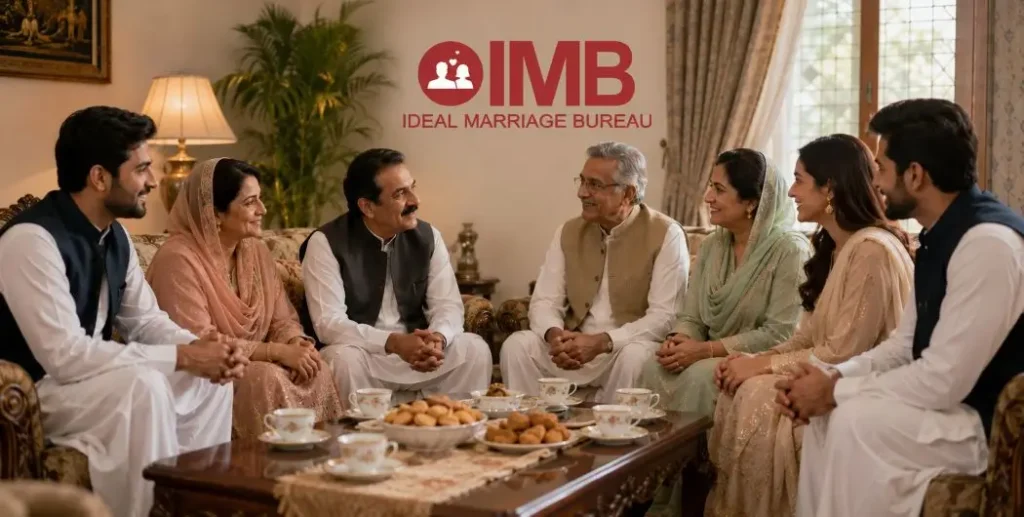
A rishta lands on the table. Everyone smiles, tea gets poured, and somewhere under the small talk, a family is quietly trying to answer a huge question: is this the right match?
Families evaluate marriage proposals by weighing shared values, personality, religious and cultural fit, financial habits, and family background — usually through direct conversation, references, and time, not gut feeling alone. That’s the short version. The long version is what actually protects a marriage once the wedding season excitement wears off.
This guide breaks down the 10 factors that matter most, based on what Ideal Marriage Bureau sees repeatedly in the rishta evaluation process — and backed by research, not guesswork.
Why Evaluating Marriage Proposals Is Important
Marriage isn’t a solo decision, even when it feels like one. It’s a merger of two families, two histories, and two sets of expectations that now have to share a dining table for the next few decades.
Research backs this up directly. A 2023 study on family involvement and marital satisfaction found a statistically significant positive correlation between how involved families are and how satisfied couples report being in their marriage (International Journal of Indian Psychology, 2023). In plain English: families who evaluate proposals carefully aren’t being dramatic. They’re doing the couple a favor.
Skip the evaluation, and you’re not avoiding conflict — you’re just postponing it to after the nikkah.
1. Family Values and Upbringing
Before anything else, families look at how a person was raised. Not to judge, but because upbringing shapes almost everything else on this list.
- How does the family treat elders?
- Is there mutual respect between parents and children?
- Do their traditions and yours sit comfortably together, or clash on day one?
You’re not just marrying a person. You’re marrying their dinner table conversations too.
2. Character and Personality
Degrees and job titles look great on paper. They say nothing about how someone behaves when the flight gets cancelled or the in-laws overstay their visit.
Families typically watch for:
- Honesty in conversation, especially about difficult topics
- Emotional maturity under pressure
- How disagreements are handled — calmly, or with slammed doors
| What to Observe | Why It Matters |
|---|---|
| Reaction to small inconveniences | Predicts behavior during real conflict and stressful situations. |
| Consistency between words and actions | Signals reliability, honesty, and long-term trustworthiness. |
| How they speak about ex-relationships or past conflicts | Reveals accountability, emotional maturity, and respect for others. |
3. Religious and Cultural Compatibility
Shared faith and cultural background reduce a huge category of future disagreements before they even start — from how holidays are celebrated to how children are raised.
This doesn’t mean two people need to be identical. It means the gap between practice and expectation shouldn’t be wider than either family can comfortably bridge.
4. Education and Career Stability
Not because a degree makes someone a better spouse — it doesn’t — but because career direction hints at ambition, work-life balance, and how someone plans for the future.
A family evaluating this factor usually asks: does this person’s career path fit with the lifestyle both sides expect five or ten years from now?
5. Financial Responsibility
Here’s where families get practical, and honestly, they’re right to.
Money isn’t just about how much someone earns. It’s about habits. Research from Kansas State University, published in the journal Family Relations, found that arguing about money is the strongest predictor of divorce — stronger than disagreements about children, in-laws, or sex, and independent of income or net worth. A separate longitudinal study of over 4,500 couples backed this up, finding that financial disagreements between spouses were the strongest disagreement type linked to divorce risk.
That’s not a small detail. That’s the headline.
Families checking financial responsibility aren’t being nosy — they’re checking the single biggest predictor of long-term marital stability that research has identified.
6. Lifestyle and Future Goals
Where will the couple live — with extended family, or independently? Are children part of the plan, and when? Is relocation on the table for work?
These conversations feel awkward before marriage. They feel a lot worse after it, when assumptions turn into arguments. A simple marriage compatibility checklist covering living arrangements, family planning, and career flexibility solves most of this before it becomes a problem.
7. Health and Well-being
This one deserves a gentle touch. Families generally look for general transparency about health and lifestyle habits — not for perfection, but for honesty. A partner who’s upfront about their health is signaling something bigger: that they won’t hide important things later either.
8. Communication Between Families
Here’s a quiet truth: the best marriages often start with the most awkward conversations. If both families can talk openly — even about uncomfortable topics — before the wedding, they’ll likely manage the harder conversations after it too.
Involving the couple directly in these discussions, rather than deciding everything on their behalf, also tends to produce stronger long-term outcomes. Research on family dynamics in arranged marriages consistently notes that active, two-way involvement from both families — not just approval from one side — shapes how well the marriage functions over time. Studies describe how parents, and often extended family, play an active, ongoing role throughout the matchmaking process rather than a one-time approval.
9. Background Verification
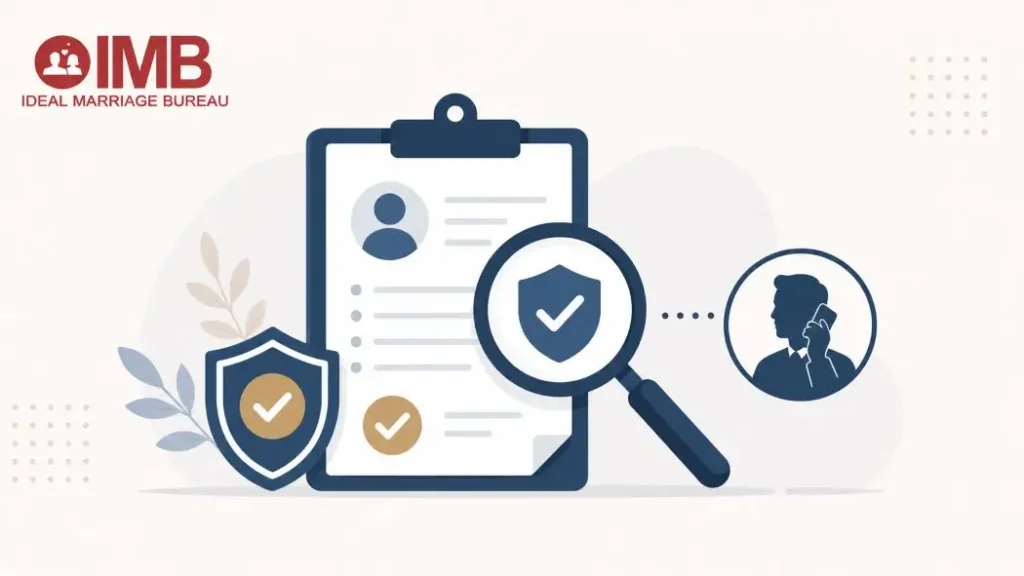
This is the step people are most tempted to skip, usually because it feels awkward or “untrusting.” It shouldn’t.
Basic background verification for marriage typically includes:
- Confirming education and employment details
- Checking for any previous marriages or undisclosed commitments
- Speaking with mutual acquaintances or trusted references
- Verifying general reputation through the community or matchmaking service
A little discomfort now is far cheaper than a major surprise after the wedding.
10. Mutual Expectations Before Marriage
Last but honestly the most important: does everyone agree on what marriage actually looks like day-to-day? Roles, decision-making, boundaries with in-laws, finances — these need to be discussed out loud, not assumed.
Ready to evaluate a proposal with confidence instead of guesswork?
Get in touch with Ideal Marriage Bureau today and let our matchmaking experts guide your family through a structured, transparent process.
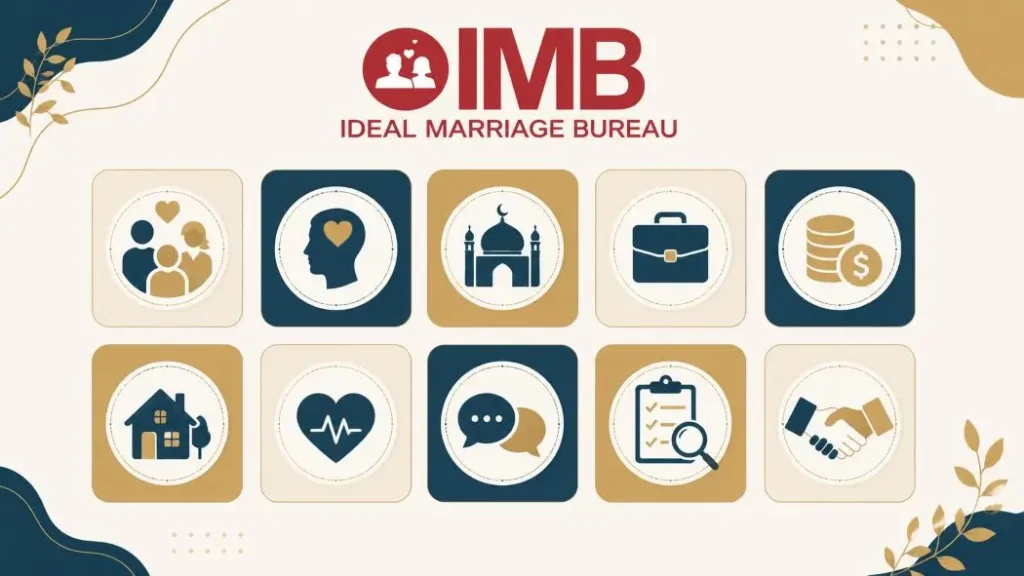
Quick Comparison: The 10 Factors at a Glance
| Factor | What to Look For | Question to Ask |
|---|---|---|
| Family Values | Respect, traditions, and attitude toward caring for elders. | “How involved is your family in daily life?” |
| Character | Honesty, emotional maturity, and integrity. | “How do you handle disagreements?” |
| Religion & Culture | Shared beliefs, practices, and cultural expectations. | “What does religious practice look like day-to-day for you?” |
| Education & Career | Career stability, ambitions, and long-term goals. | “Where do you see your career in five years?” |
| Finances | Spending habits, saving approach, and financial transparency. | “How do you usually manage savings and expenses?” |
| Lifestyle Goals | Living arrangements, family planning, and future expectations. | “Do you prefer a joint family or an independent household?” |
| Health | General health transparency and willingness to discuss concerns. | “Is there anything about your health I should know?” |
| Family Communication | Open, respectful communication between both families. | “Can our families speak directly and honestly?” |
| Background | Verified history, references, and family reputation. | “Who can we speak to for a reference?” |
| Mutual Expectations | Alignment on roles, responsibilities, and personal boundaries. | “What does a typical week look like for you, ideally?” |
How Ideal Marriage Bureau Helps Families Make Better Marriage Decisions
At Ideal Marriage Bureau, we’ve helped many families evaluate marriage proposals. We’ve found that long-term compatibility depends on shared values, honest communication, realistic expectations, and thorough background verification — not just initial impressions.
Our rishta process is built around exactly the factors covered above: structured profile verification, guided family conversations, and enough transparency that both sides walk into the decision with clear eyes, not just good intentions. If you’re currently going through how to verify a marriage proposal, our team can walk you through the process step by step.
Final Thoughts about How Families Evaluate Marriage Proposals
Evaluating a marriage proposal isn’t about being suspicious of a good match — it’s about making sure a good match is actually a good match, and not just a good first impression. Values, character, compatibility, finances, and honest verification aren’t romantic topics. But they’re the ones that quietly decide whether a marriage lasts.
Take the time. Ask the awkward questions. Involve both families in the conversation, not just the paperwork.
Frequently Asked Questions
How do families evaluate marriage proposals?
Families typically evaluate marriage proposals by assessing shared values, character, religious and cultural compatibility, financial habits, and family background — usually through direct conversation, references, and time spent getting to know both sides.
What are the most important factors before accepting a rishta?
The most important factors include compatible values, verified background information, financial transparency, and clear, mutual expectations about life after marriage.
How can families verify a marriage proposal?
Families can verify a proposal by confirming education and employment details, speaking with mutual references, and working with a trusted matchmaking service that handles background verification directly.
Why is compatibility important in arranged marriages?
Compatibility reduces the number of everyday disagreements a couple faces after marriage. A comparative study of arranged and love marriages found significant differences between the two in intimacy, passion, commitment, and communication style, making early compatibility checks especially valuable.
What questions should parents ask before marriage?
Useful questions include: “How do you handle disagreements?”, “What does your ideal day-to-day life look like?”, and “How involved do you expect our families to be?”
What red flags should families avoid?
Common red flags include reluctance to share background information, inconsistent answers about finances or past relationships, and unwillingness to include family in honest conversations.
Not sure where to start?
Explore Ideal Marriage Bureau’s matchmaking services and get expert support through every step of the rishta evaluation process – from first introduction to final decision.